Guide
Hiking Pedra da Gávea: the rock scramble, safety and park rules
One of Rio's hardest and most rewarding day hikes. What Tijuca National Park says about the trail, the rock sections near the top, guides and ropes, start times, heat and water, getting to the trailhead, the easier Pedra Bonita next door, and what to do in an emergency.
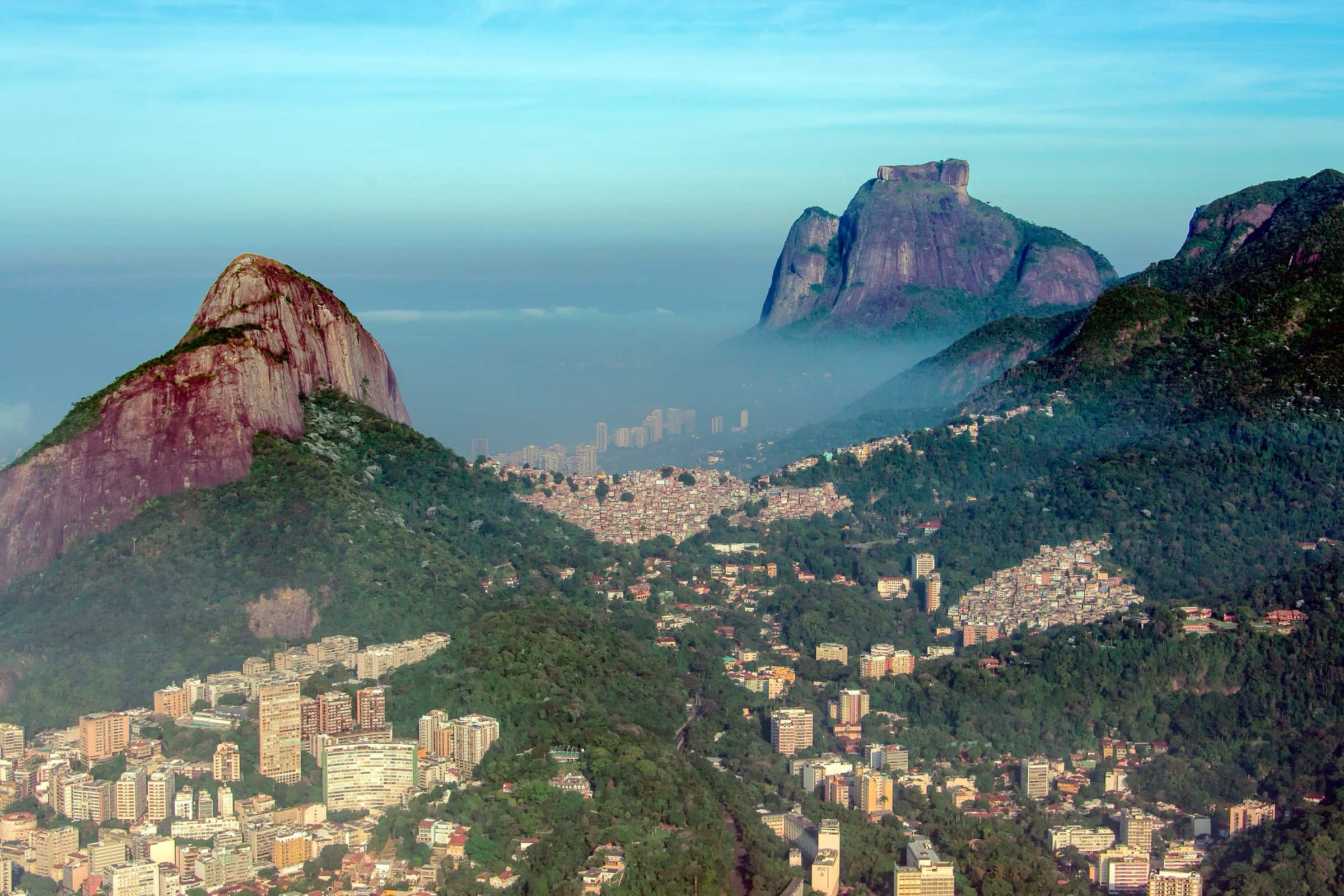
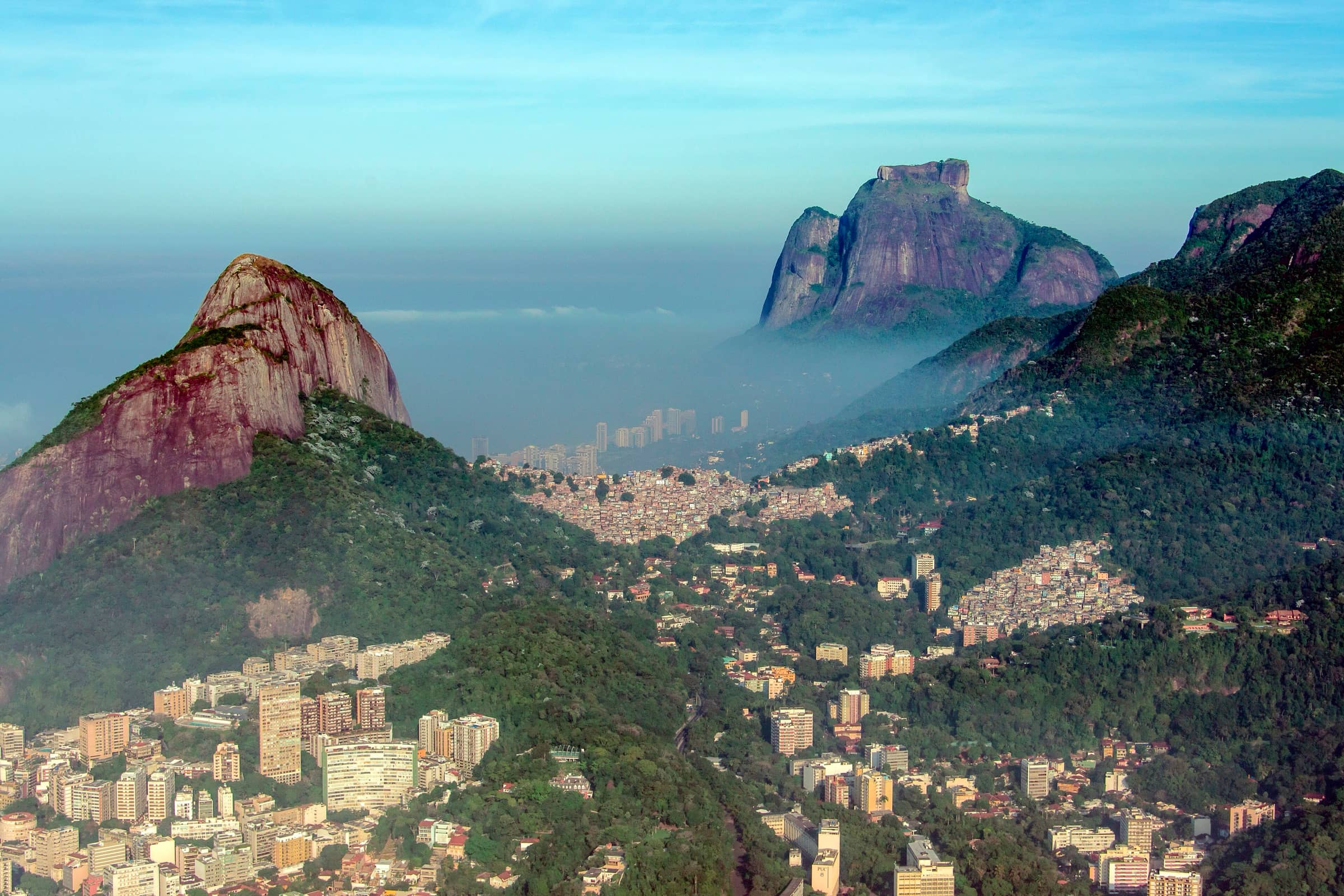
Photo: Chensiyuan · CC BY-SA 4.0
Pedra da Gávea rises straight out of the Atlantic on the west side of Rio de Janeiro, between the neighborhoods of São Conrado and Barra da Tijuca. Tijuca National Park, which manages it, calls it the largest seaside monolith in the world, reaching more than 800 m (about 2,600 ft) above sea level. The park also describes the summit view as one of the most beautiful natural views in the world.
It's also one of the toughest day hikes in the city. This guide covers what the park says about the trail, the climbing sections near the top, timing, getting there and what to do in an emergency. It's based on Tijuca National Park's official pages (the park is run by ICMBio, Brazil's federal agency for protected areas) and on Rio de Janeiro's state fire department. Rules can change, so check the park's website and social channels before you go.
What the hike is like
The park rates the Pedra da Gávea trail as "heavy (difficult)" and says the hike takes about five hours on average. It's meant for people in good physical shape who are used to demanding hikes. Expect more than 800 m (about 2,600 ft) of elevation gain.
Higher up, the forest trail turns into rock. The park warns that the route has exposed vertical sections where accidents, including deaths, have happened. The best known of these is the rock pitch hikers call the Carrasqueira. The park's pages don't give its height or grade, so we won't either. Treat it as a short rock climb, not a walk, on the way up and on the way down.
Do you need a guide or a rope?
The park advises going with an experienced guide or hiker. It recommends that every group includes at least one person with climbing experience, and that groups stay under 10 people. Its climbing page adds that beginners should go with an experienced guide and that you should never go alone.
On gear, the park says to bring a rope and strongly recommends safety equipment: a harness, rope, carabiners and slings. If nobody in your group knows how to use that gear, a guide is the sensible choice. The park doesn't provide guides itself. You hire one privately and arrive together.
“On Pedra da Gávea, reaching the summit is optional. Getting down safely isn't. Go with someone who knows the rock, and turn back early if anything feels wrong.”
— Great Hikes team
When to go
The Pedra Bonita and Pedra da Gávea sector of the park is open daily from 8 am to 5 pm. On Pedra da Gávea, you can only start up the trail until 2 pm, and everyone has to finish by the 5 pm closing. In summer, the park allows visitors to exit until 6 pm. With an average of about five hours on the trail, the earlier you start, the better. Camping and pets aren't allowed.
The park doesn't publish a "best season" for this trail. It does say opening hours can change in severe weather and that access can be closed at any time for safety. In August 2026, for example, ICMBio advised people not to visit the park at all on a day with strong wind alerts from Rio's Civil Defense. Check the park's website and official Instagram on the morning of your hike.
Heat, water and rain
For this trail, the park says to bring food and water for the whole route. Its general hiking advice adds a hat or cap, comfortable clothes, closed shoes with non-slip soles, insect repellent, sunscreen, plenty of water and a light snack. The park doesn't list water sources on this trail, so carry everything you'll need for a long, hot day.
On rain, the park's climbing advice is simply to watch the weather. It doesn't publish a specific rain rule for Pedra da Gávea. Our advice as the Great Hikes team: the rock sections are where accidents happen, so if it has been raining or storms are forecast, choose another day.
Getting to the trailhead
The trail starts at Barrinha, on Estrada Sorimã, between São Conrado and Barra da Tijuca. The park's own directions are to take public transport heading to Barrinha. Routes change, so check current options before you set out. Mobile signal is weak inside the park, so download your map and share your plans while you still have coverage.
An easier alternative: Pedra Bonita
If the climb sounds like too much, Pedra Bonita is in the same sector of the park and is a much gentler outing. The park says the top is reached after a walk of about 20 minutes, with a spectacular view over São Conrado, parts of Rio's South Zone and Barra da Tijuca. You can start up until 4 pm. The trail begins at the park's vehicle checkpoint, and parking for trail visitors is limited to 24 vehicles.
Pedra Bonita is also home to what the park calls one of the most famous and busiest free-flight ramps in the world. There are two takeoff ramps at 517 m (about 1,700 ft): a wood-and-metal ramp for hang gliders and a natural one for paragliders. Instruction flights are available. The park says instructors must be accredited by the Brazilian Free Flight Association (ABVL), and points beginners to the Clube São Conrado de Voo Livre to find one.
What to bring
Based on the park's lists: sturdy, closed shoes with non-slip soles, comfortable clothing, a proper backpack, food and plenty of water for the whole day, a hat, sunscreen and insect repellent. For Pedra da Gávea, add the climbing gear the park recommends (harness, rope, carabiners and slings) and someone who knows how to use it. A charged phone is worth carrying, even with weak signal.
Emergencies and rescue
In an emergency, call 193, the number for Rio de Janeiro State's fire department (Corpo de Bombeiros, CBMERJ). Remember that signal is weak in the park, so keep your phone charged and make sure someone outside your group knows your route and when you expect to be back.
The park is clear that you are also responsible for your own safety, and that its access checkpoints are there for monitoring and guidance, not to guarantee your safety. For non-urgent questions, the park's contact email is parnatijuca@icmbio.gov.br.
Hours, rules and trail conditions can change, sometimes on the day. Before you go, check the current visiting rules and notices on Tijuca National Park's official website (parquenacionaldatijuca.rio) and its official social channels, and follow any instructions from park staff.
Sources
- Parque Nacional da Tijuca (ICMBio) – Pedra da Gávea (difficulty, duration, guide and gear advice, access, hours)
- Parque Nacional da Tijuca (ICMBio) – New visiting rules (sector hours, 2 pm start limit on Pedra da Gávea, 4 pm on Pedra Bonita, weather changes)
- Parque Nacional da Tijuca (ICMBio) – Pedra Bonita
- Parque Nacional da Tijuca (ICMBio) – Free flight (Voo livre) at Pedra Bonita
- Parque Nacional da Tijuca (ICMBio) – Climbing (Escalada) guidance
- Parque Nacional da Tijuca (ICMBio) – Trail hiking (Caminhada em trilha) guidance
- Parque Nacional da Tijuca (ICMBio) – FAQ (guides, sectors, hours)
- Parque Nacional da Tijuca (ICMBio) – Guidance for visiting the park (weak signal, contact)
- Parque Nacional da Tijuca (ICMBio) – Notice: avoid the park today (21/08/26, wind alert)
- Corpo de Bombeiros Militar do Estado do Rio de Janeiro (CBMERJ) – Em caso de emergência, disque 193